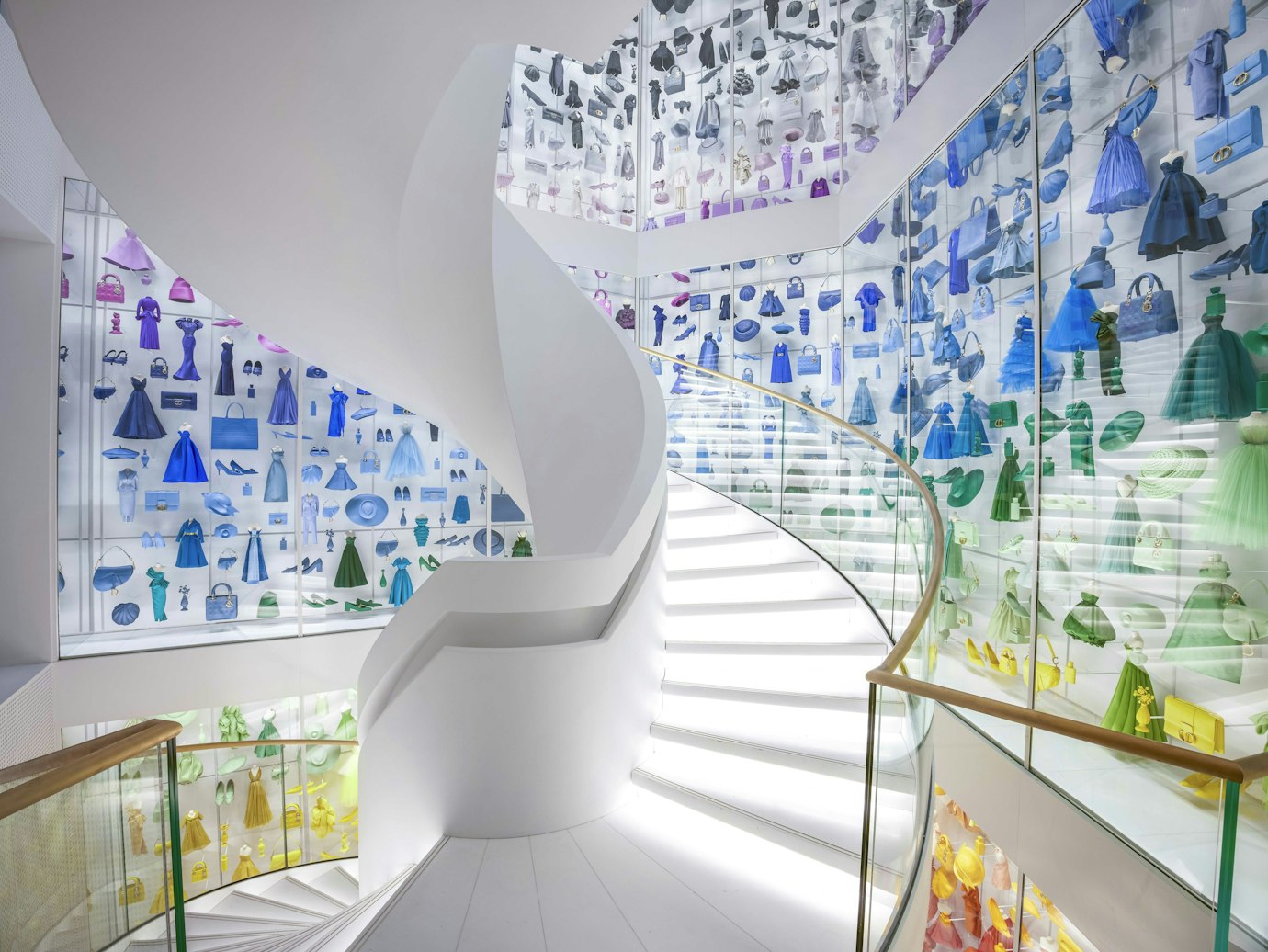
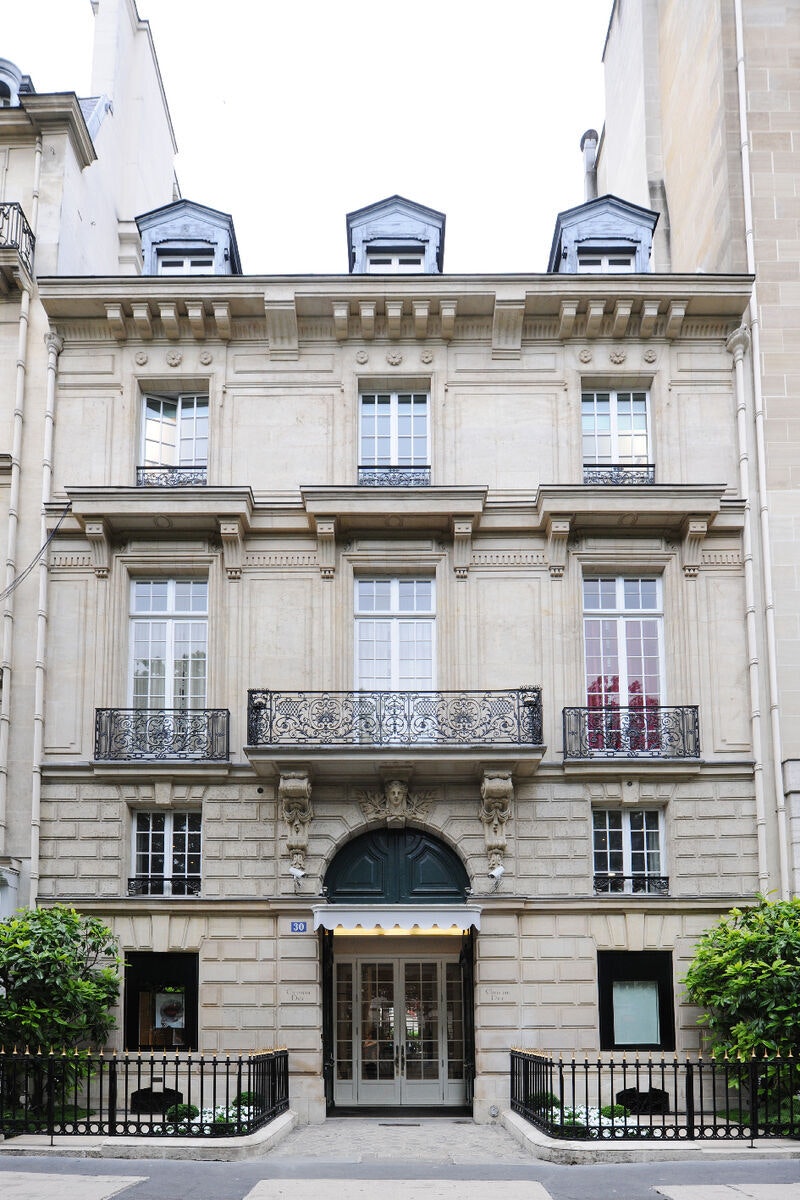
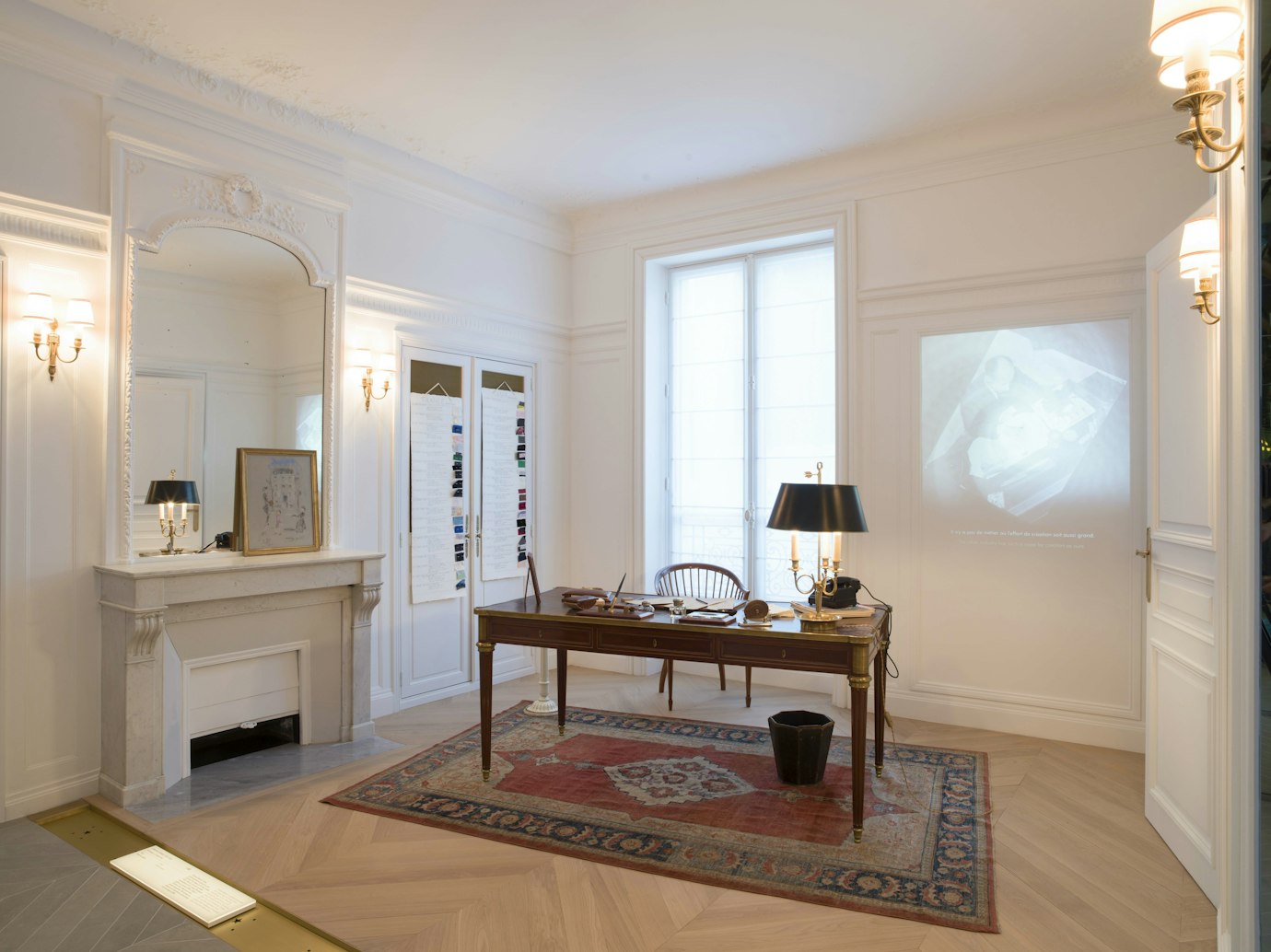
Welcome to La Galerie Dior!
The application allows you to enrich your visit and discover exclusive content.
Welcome to La Galerie Dior!
The application allows you to enrich your visit and discover exclusive content.
Welcome to La Galerie Dior!
The application allows you to enrich your visit and discover exclusive content.
Some ornaments were particularly dear to Christian Dior, and bows are certainly the ones that feature the most in his and his successors’ work.
“Bows are the most natural ornament of a dress because they are a natural way of closing and tying material.”
Despite their simplicity – formed by tying two ribbons together – they highlight the silhouette while adding their own beauty. “I love bows to close a décolleté, trim a hat or to fasten a belt. I like them big, small or enormous, in any way and in any material,” wrote Christian Dior in his Little Dictionary of Fashion in 1954. Offering a feminine touch, they are used to accessorise the hair or shoes, can be transformed into earrings and have adorned the Miss Dior perfume bottles since 1949. A well-placed bow can make a look more demure or extravagant, and can even be an integral part of a design when draped around the body.
In the late 17th century, Mademoiselle de Fontanges, one of the last mistresses of Louis XIV, started the trend of a hairstyle that was named after her and held in place by a simple ribbon tied above the forehead. Admired by Christian Dior, the “fontange” bow was used to adorn the oval and rectangular medallions created by Victor Grandpierre for the House. To this day, this decorative element still symbolises the extreme elegance of Dior style.
Some ornaments were particularly dear to Christian Dior, and bows are certainly the ones that feature the most in his and his successors’ work.
“Bows are the most natural ornament of a dress because they are a natural way of closing and tying material.”
Despite their simplicity – formed by tying two ribbons together – they highlight the silhouette while adding their own beauty. “I love bows to close a décolleté, trim a hat or to fasten a belt. I like them big, small or enormous, in any way and in any material,” wrote Christian Dior in his Little Dictionary of Fashion in 1954. Offering a feminine touch, they are used to accessorise the hair or shoes, can be transformed into earrings and have adorned the Miss Dior perfume bottles since 1949. A well-placed bow can make a look more demure or extravagant, and can even be an integral part of a design when draped around the body.
In the late 17th century, Mademoiselle de Fontanges, one of the last mistresses of Louis XIV, started the trend of a hairstyle that was named after her and held in place by a simple ribbon tied above the forehead. Admired by Christian Dior, the “fontange” bow was used to adorn the oval and rectangular medallions created by Victor Grandpierre for the House. To this day, this decorative element still symbolises the extreme elegance of Dior style.